
Home Blog Importance of Healthcare Notebooks
Importance of Healthcare Notebooks
July 2, 2026
Navigating Healthcare Transitions with Healthcare Notebooks
Keeping a healthcare notebook can make a big difference for families and individuals managing ongoing healthcare needs. Here’s a blog-style version with a simple, conversational tone that works for parents of children of any age as well as teens and adults with disabilities.
Why Every Family Should Have a Healthcare Notebook
When you’re caring for a child or family member with a disability, chronic illness, or complex medical needs, it’s easy to feel like you’re juggling endless paperwork. Medical records, medication lists, specialist contacts, test results, therapy notes, and appointment summaries can quickly pile up.
Then comes the moment when a doctor asks, “When was their last surgery?” or “What medications have they tried before?”
Having that information in one place can make all the difference.
A healthcare notebook is a simple tool that helps you organize important medical information so it’s easy to find when you need it most. Whether you’re preparing for a routine checkup, seeing a new specialist, visiting the emergency room, or coordinating care between multiple providers, having everything together can reduce stress and improve communication.
What Is a Healthcare Notebook?
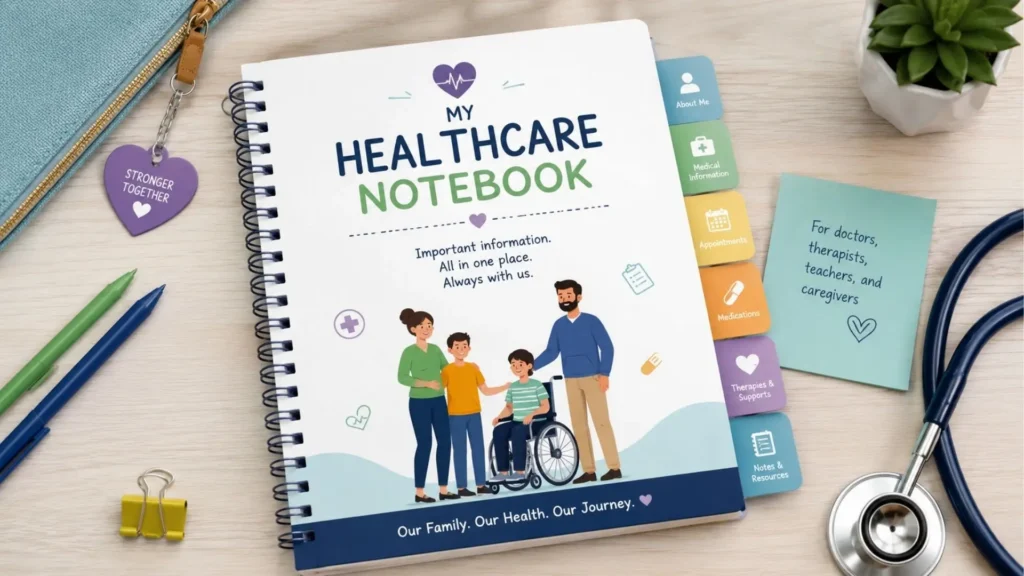
A healthcare notebook is a personalized record that keeps your most important healthcare information organized in one place. It can be a printed binder, a notebook, or even a digital file—whatever works best for you and your family.
Many families find that a healthcare notebook becomes their go-to resource for managing care over time. It can also help teens and adults with disabilities gradually learn about their own healthcare and become more involved in managing it as they are ready.
What Should You Include?
Every person’s healthcare notebook will look a little different, but common sections include:
- Medical history and diagnoses
- Current medications and dosages
- Allergies and sensitivities
- Doctors, specialists, therapists, and other provider contact information
- Hospitalizations, surgeries, and procedures
- Immunization records
- Lab results or important test reports
- Medical equipment or supplies
- Emergency contacts
- Insurance information
- Questions for upcoming appointments
- Notes from doctor visits
You don’t need to include everything at once. Start with the information you use most often and add to it over time.
How to Get Started
Creating a healthcare notebook doesn’t have to be complicated.
Gather your records. Collect recent doctor’s visit summaries, medication lists, hospital discharge papers, therapy reports, school or care plans, and any other important healthcare documents.
Create sections that work for you. Organize information into categories that are easy to find, such as medications, providers, medical history, appointments, and emergency information.
Keep it updated. After each appointment, add new information, update medications, and replace outdated documents. Spending just a few minutes after each visit can save hours of searching later.
Bring It to Every Appointment
One of the biggest benefits of a healthcare notebook is having accurate information at your fingertips.
Bringing it to medical appointments allows you to:
- Answer questions more confidently.
- Share your child’s or loved one’s medical history with new providers.
- Keep track of recommendations and next steps.
- Coordinate care between multiple specialists.
- Have important information available during unexpected medical situations.
Over time, your notebook becomes a valuable record of your healthcare journey.
Find a Healthcare Notebook That Works for You
You don’t have to create a healthcare notebook from scratch. Several organizations like the Utah Parent Center offer free template healthcare notebooks in English and Spanish that you can customize to fit your family’s needs. There is also this fillable healthcare notebook from ECAC Parent Center.
The best healthcare notebook is the one you’ll actually use. Whether it’s a three-ring binder, a spiral notebook, or a digital folder, having your important medical information organized in one place can help you feel more prepared, reduce stress during appointments, and make it easier to advocate for yourself or your loved one.
Get Support and Updates in Your Inbox
Workshops, resources, and updates for Utah families — free, and you can unsubscribe any time.