
Home Blog Advocating for Your Student Through Written Communication
Advocating for Your Student Through Written Communication
March 4, 2025
Tips for School Email Communication
There may be times when your child experiences challenges at school. While informal conversations with teachers—whether in person, via phone, or through notes—can be effective, sometimes a formal email or written request is necessary. Written communication ensures clarity, emphasizes the seriousness of your concern, and serves as a record of correspondence.
You may want to email or write to the school if:
- Your child has an issue related to their Individualized Education Program (IEP)
- There is a concern with their general education experience
- Your child is facing bullying or social challenges
- There is a behavioral concern that needs addressing
- You need additional support for your child’s needs
Any concern that affects your child’s well-being, learning, or school experience is worth addressing in writing if you feel the school’s support is needed, however, many caregivers reach out to schools when they are feeling emotional or frustrated about their student’s situation. Here are additional tips to keep the message professional and solution-focused:
- Pause Before Sending – Take a moment to step away and reread the email before hitting “send” to ensure the tone is calm and constructive.
- Write a Draft First – If feeling emotional, write a rough draft and revisit it later to remove unnecessary frustration or blame.
- Stick to Facts, Not Feelings – Instead of saying, “I am so upset that my student is struggling and nothing is being done!” try “My student has been struggling with [specific issue], and I would like to discuss potential solutions.”
- Use a Positive and Collaborative Tone – Frame concerns as a team effort. For example, “How can we work together to support [Student’s Name]?” rather than “You need to fix this.”
- Be Solution-Oriented – Instead of focusing on what’s wrong, suggest or ask about possible next steps.
- Keep a Record of Communication – Save emails and responses for reference and future discussions.
- Use “I” Statements – Avoid sounding accusatory. Instead of “You are not helping my student,” say “I am concerned about my student’s progress and would like to discuss strategies to help.”
- Acknowledge Teachers’ and Staff Efforts – A simple “I appreciate your time and support” can set a positive tone for collaboration.
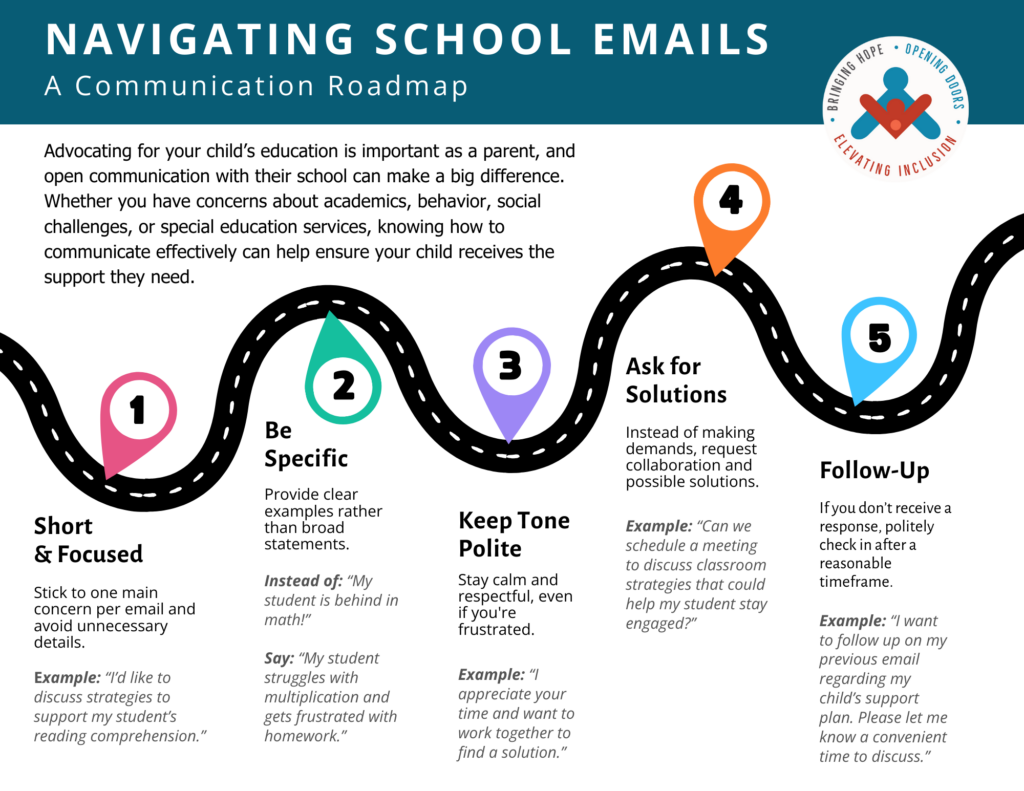
Communication PDF information sheet:
Get Support and Updates in Your Inbox
Workshops, resources, and updates for Utah families — free, and you can unsubscribe any time.