
Home Blog Resolution Steps to IEP Concerns
Resolution Steps to IEP Concerns
October 8, 2024
As a parent, navigating your child’s IEP (Individualized Education Program) can sometimes feel overwhelming. But remember, you are not alone in this process! Communication with your child’s IEP team is key to meeting their needs and addressing any challenges. If you ever feel that things aren’t working out or progress isn’t being made, there are problem-solving steps you can take. Below, we outline some helpful steps to follow and options for resolving issues at different levels. By staying informed and working closely with the school, you can help ensure your child gets the support they need to succeed.
1. Your child’s teacher is your first contact. Schedule a meeting to:
-
- Ask about your child’s strengths and areas for growth.
- Discuss how instruction is tailored for your child.
- Share any concerns about the supports and services on the IEP.
2. If talking to the teacher doesn’t resolve the concern, contact your student’s IEP case manager or coordinator:
-
- Before the conversation, write down your concerns and questions. Have specific examples or data to share, such as how your child struggles with a particular task or does not receive the support outlined in their IEP.
- If something in the IEP is unclear or you don’t understand why certain supports aren’t working, ask for clarification. This can help you and the team better identify what needs to change.
3. If a resolution still cannot be reached, address it with the school principal or school director at a charter school.
-
- Ask for an in-person or virtual meeting with the principal or director to discuss the issue. This allows for a more thorough conversation than email or phone alone.
- Rather than focusing solely on the school’s actions, frame the conversation around your child’s educational needs and the supports that aren’t being provided. This keeps the discussion solution-oriented.
- Maintain a respectful tone, but be firm in advocating for your child’s rights and needs. It’s important to ensure the principal or director understands the urgency of resolving the issue.
4. If the school cannot help, you can contact the School District’s Special Education Director or Supervisor.
-
- Invite a Parent Consultant from the Utah Parent Center to join you in an IEP meeting. We have many assigned consultants with specific district schools and charters found here.
- Ask for a State Facilitator to attend through the Utah State Board of Education.
5. If no agreement is reached, there are more formal steps you can take through formal dispute resolution:
-
- File a State Complaint
- Request Mediation
- Consider a Due Process Hearing
(click photo for enlarged viewing)
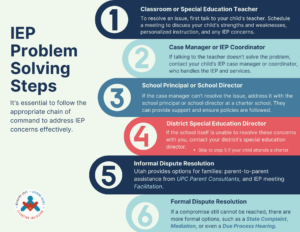
The IEP Handbook has more details about these options. It’s always best to resolve issues at the school level, but there are other resources if needed.
Additional Resources:
IDEA Dispute Resolution Parent Guides and Companion Videos
Communicating with your child’s school short guide brochure download
Utah State Board of Education Resolution Options & Forms
CADRE Special Education Dispute Resolution Process Quick Guide
Get Support and Updates in Your Inbox
Workshops, resources, and updates for Utah families — free, and you can unsubscribe any time.