
Home Blog Women’s History Month
Women’s History Month
February 24, 2026
Why It Matters to Celebrate Women with Disabilities
This Women’s History Month, we’re celebrating the strength, leadership, and often unseen contributions of women with disabilities. Their stories help us better understand the challenges they face and the powerful ways they have changed schools, policies, research, and communities for the better.
As parents, learning about this history matters. It helps us understand our daughters’ experiences and reminds us that progress happens because people speak up.
What Is Intersectionality and Why Does It Matter?
Intersectionality is a big word that describes something very real.
It means that different parts of a person’s identity, like gender, disability, race, or income, overlap and shape their experiences. These factors don’t just “add up.” They interact in ways that can create unique challenges.
For example, a girl with a disability may face barriers that are different from:
- Boys with disabilities
- Girls without disabilities
- Women without disabilities
The Convention on the Rights of Persons with Disabilities (Article 6) officially recognizes that women and girls with disabilities experience “multiple discrimination.” That language was included because disabled women advocated strongly for their experiences to be recognized.
What does this look like in everyday life? Keri Gray shares her story in this video and beautifully illustrates how intersectionality impacts her and millions of others.
Understanding this helps us create better supports at school, in healthcare, and in our communities.
Why So Many Girls Were Missed
For many years, disability research focused mostly on boys and men. They were treated as the “standard.”
Because of that:
- Girls often present differently from boys
- Their needs were overlooked
- Many were diagnosed later in life or not at all
- They were sometimes misunderstood instead of supported
Thankfully, that is beginning to change. Because women have spoken up:
- Diagnostic criteria are expanding
- Professionals are learning to recognize different presentations
- More girls are being identified earlier
- More families are getting answers sooner
Today, change is happening because women have spoken up and shared their experiences. Advocates and researchers are expanding diagnostic criteria and helping professionals recognize that disabilities can look different in girls and women. As a result, more girls are being identified earlier and gaining access to the supports they need, changing life paths and opening doors that once felt out of reach.
Making the Invisible Visible
Many disabled women carry a hidden burden: they provide unpaid care for family members while simultaneously navigating their own access needs.
This can include:
- Caring for children
- Supporting aging parents
- Helping other family members
- Managing households
This unpaid caregiving often goes unnoticed.
Research shows that women frequently live with a greater long-term burden of disability in daily life than men. Yet studies still don’t always look closely at how disability affects women differently, especially during pregnancy, menopause, or caregiving years.
Advocates are pushing for:
- Policies that recognize caregiving work
- Access to respite services
- Support systems for disabled caregivers themselves
When we acknowledge this invisible work, we can begin to build systems that truly support families.
The Voices Moving the Needle
Disabled women have led major disability rights efforts around the world. They understood that you can’t talk about disability rights without also talking about gender, race, economic status, and other identities.
Here are six women whose leadership continues to make a difference:
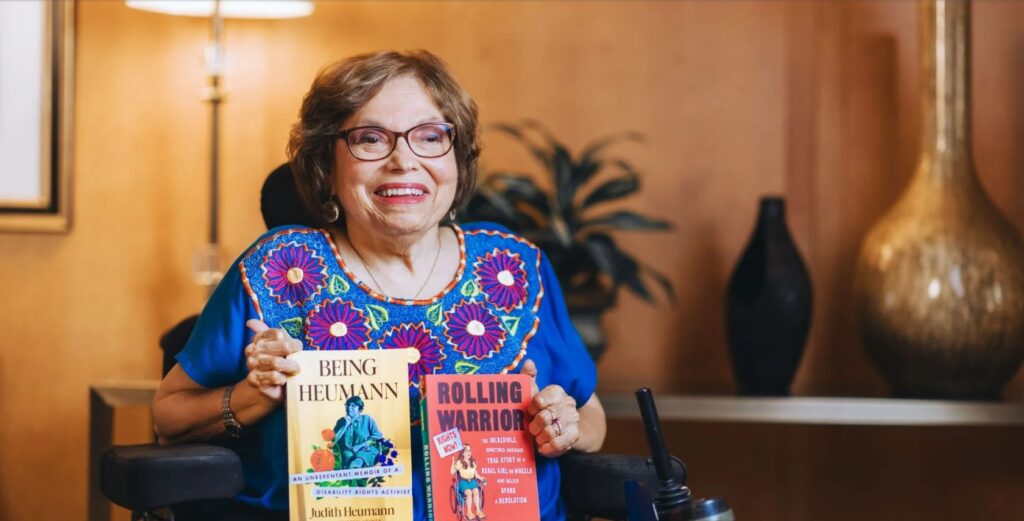
Judith Heumann

photo credit:ignitenational.org
Often called the “mother of the disability rights movement,” Judy Heumann helped lead the 504 sit-ins in 1977 and later helped shape the Americans with Disabilities Act (ADA) and the independent living movement.
Helen Keller

Deafblind writer and activist who, beyond the familiar childhood story, spoke and wrote in support of disability rights, labor rights, and women’s suffrage, helping pave the way for later disability advocates.
Agatha Tiegel Hanson

photo courtesy ofGallaudet University Archives
A Deaf educator and early advocate for Deaf women’s education, she helped expand leadership opportunities for Deaf women.
Alice Wong

photo credit: John D. and Catherine T. MacArthur Foundation
Founder of the Disability Visibility Project, Alice Wong amplifies disabled voices and brings race, gender, and culture into disability conversations.
Rosa May Billinghurst

A wheelchair‑using suffragette in the early 1900s, nicknamed the “cripple suffragette,” who used her tricycle wheelchair in direct‑action protests with the Women’s Social and Political Union.
Rebecca Cokley

Photo of Rebecca Cokley, CC BY-SA 4.0 (via Wikimedia Commons)
A Little Person, third-generation disability advocate, and policy leader whose work centers on how disability intersects with race, gender, and class within U.S. public policy.
Moving Forward Together
This Women’s History Month, we celebrate how far we’ve come and recognize the work still ahead.
Change happens when:
- Research includes girls and women
- Schools truly listen to girls with disabilities
- Caregivers receive support
- Disabled women are at the table when policies are written
The world is better because disabled women refuse to stay invisible.
As parents, we can continue that legacy by:
- Listening to our daughters’ experiences
- Asking questions when something doesn’t feel right
- Advocating for inclusive supports
- Teaching our children that their voices matter
The future is brighter because disabled women refuse to be invisible. Their leadership reminds us that inclusive progress benefits everyone, and their resilience shows us what’s possible when we commit to creating systems that work for everyone.
Get Support and Updates in Your Inbox
Workshops, resources, and updates for Utah families — free, and you can unsubscribe any time.